

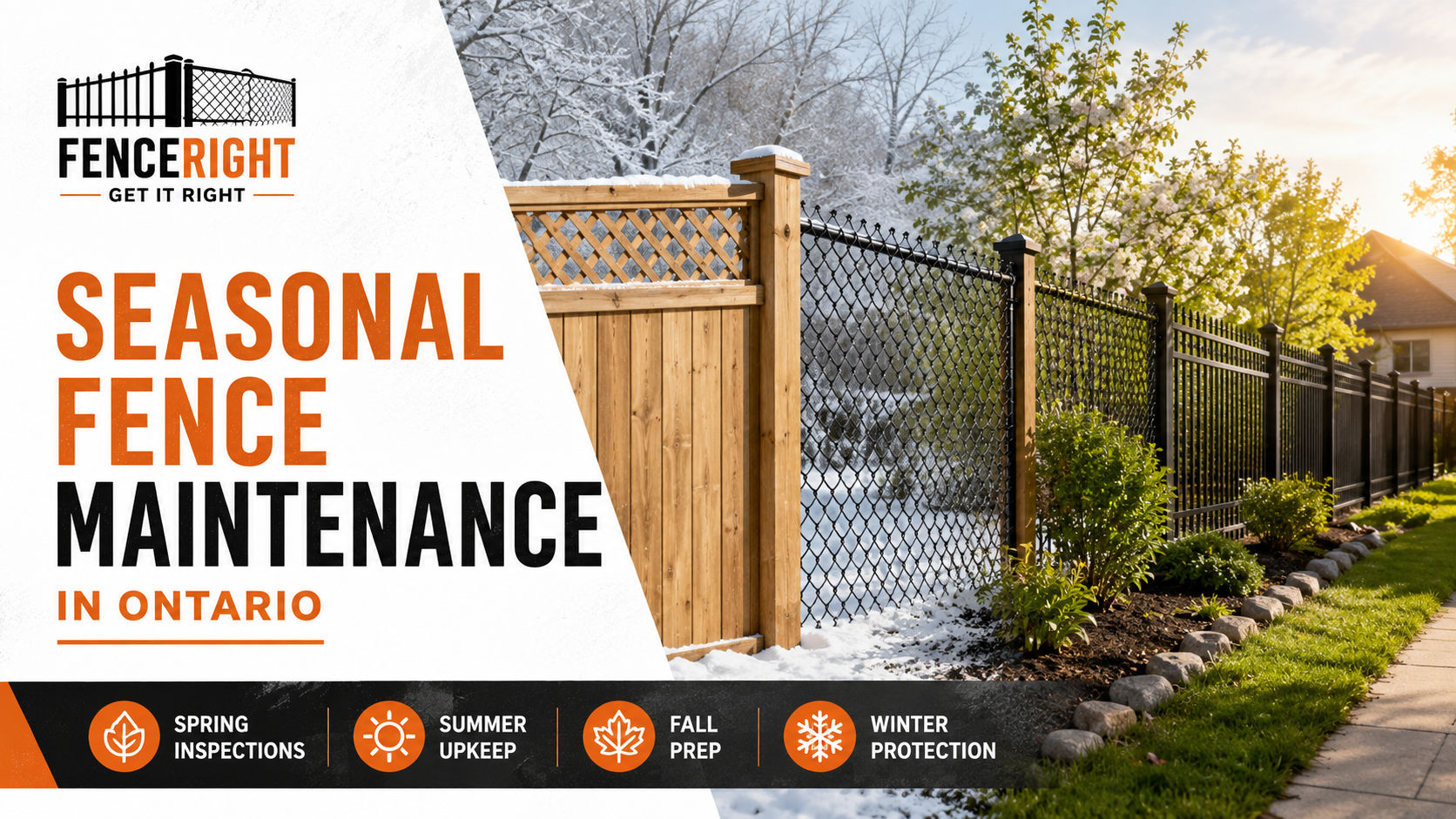
How do Ontario winters affect your fence? More than most homeowners realize. Between the deep freezes, heavy snowfall, spring thaw, and summer heat, Ontario’s climate puts constant pressure on every fence post, panel, and joint. Without regular upkeep, even a well-built fence can start to fail within just a few years. The good news is that consistent, seasonal fence maintenance Ontario homeowners can handle themselves goes a long way toward protecting that investment.
Whether you have a wood fence surrounding your backyard, a chain link fence along your property line, or ornamental iron fencing framing your front yard, this guide walks you through exactly what to do and when to do it.
Why Fence Maintenance Matters in Ontario’s Climate
Ontario’s climate is genuinely tough on outdoor structures. Summers bring intense UV exposure and humidity, while winters deliver prolonged freezing temperatures, heavy snow loads, and road salt spray. Spring and fall act as transition seasons where temperature swings between warm days and freezing nights create constant stress on materials. For fences, this combination of seasonal extremes is one of the main reasons routine care is so important.
The freeze-thaw cycle is one of the biggest threats to fence posts specifically. When moisture gets into the soil or into small cracks in wood and masonry, it freezes and expands during cold snaps, then contracts again as temperatures rise. Over time, this repeated movement loosens fence posts from the ground, cracks wood grain, and widens any existing damage. Posts that were perfectly stable in October can start to lean noticeably by March if the winter has been particularly harsh.
Proactive maintenance does more than just keep your fence looking good. It genuinely extends the lifespan of the structure and reduces the chance of expensive repairs down the road. A wood fence that is inspected and sealed regularly can last 15 to 20 years in Ontario’s climate, while a neglected one may start showing serious deterioration within five to seven years. For homeowners in Stayner and the surrounding area, that difference in lifespan represents a significant financial return on a small, consistent time investment.
How to Maintain a Wood Fence Through Every Season
Wood is the most popular fencing material for Ontario residential properties, and it is also the one that requires the most hands-on seasonal attention. The payoff for that attention is a fence that stays structurally sound, looks great, and adds real value to your property for many years. If you’re considering replacing an older fence, you can also explore Fence Right’s wood fence installation options.
Spring Cleaning and Inspection for Wood Fences
Quick Answer: After every Ontario winter, walk your entire fence line and check for rot, warping, loose boards, and shifted posts before doing anything else.
Spring is the most important time of year for wood fence care tips Ontario homeowners should follow. Once the ground has thawed and the last frost has passed, take a full walk along your fence and look closely at every board and post.
Here is what most Ontario homeowners miss every spring: small areas of soft, discolored wood at the base of posts, which is early-stage rot that is still easy to address. Press a screwdriver lightly into the wood near the ground. If it sinks in with little resistance, rot has already started.
Beyond the posts, look for warped or cupped boards that have shifted during the freeze-thaw cycle, any boards that have pulled away from the frame, and signs of mold or mildew growth, which appears as dark green or black staining.
Clean the entire fence surface with a mild detergent mixed with water and a soft-bristle brush. Avoid power washing on a high setting, as it can force water deeper into the wood grain and cause more harm than good. Rinse thoroughly and allow the fence to dry completely before moving on to any sealing or staining work.
Sealing and Staining Your Wood Fence in Summer
Quick Answer: Apply a UV-resistant sealant or stain to your wood fence every one to two years, ideally in late spring or early summer when the wood is dry and temperatures are stable.
Summer is the best window for applying protective coatings to your wood fence. The wood needs to be fully dry before you apply anything, which is why waiting until late spring or early summer gives the fence enough time to dry out after the wet Ontario spring.
When choosing between a sealant and a stain, keep in mind that a sealant alone offers moisture protection, while a stain adds color and UV protection on top of that. For Ontario’s climate, a product that handles both is usually the better choice.
Apply the product with a brush or roller for the most even coverage, working it into the grain rather than just painting over the surface. Pay extra attention to the end grain of boards and any cut edges, as these absorb moisture most quickly.
In Ontario’s climate, reapplying every one to two years is the standard recommendation. If you notice the water is no longer beading on the surface of your fence, that is a reliable sign the coating has worn down and it is time to reseal.
Learning how to seal a wood fence in Ontario properly takes a little practice, but the process itself is straightforward. Clean the surface, let it dry, sand lightly if needed to remove any peeling finish, and then apply the new coat in long, even strokes following the wood grain.
Preparing Your Wood Fence for Winter
Quick Answer: Before the first hard frost, trim back any plants touching your fence, check drainage around posts, and apply a final protective coat if it has been more than a year since the last application.
Fall preparation is the last line of defense before Ontario’s hardest season. Start by trimming back any shrubs, vines, or tree branches that are pressing against or touching the fence. Vegetation traps moisture against the wood and accelerates both rot and mold growth over winter.
Clear away any leaves or debris piled up at the base of the fence as well, since wet organic material sitting against posts is one of the fastest ways to start a rot problem.
Check the drainage around your fence posts. If water tends to pool near the base after rain, add a small mound of soil or gravel to direct water away from the post rather than letting it sit.
If it has been more than a year since your last sealant application, apply one more coat before temperatures drop below 10°C, as most wood sealants need warmer, dry conditions to cure properly. Heading into winter with well-protected wood gives your fence the best possible chance of coming through the freeze-thaw cycle in good shape.
Chain Link Fence Maintenance: What You Need to Know
Chain link fences are known for being low-maintenance, but that does not mean they need no attention at all. Ontario winters introduce specific threats, particularly rust and physical damage from snow loads and ground movement, that are worth catching early.
Preventing Rust and Corrosion on Chain Link Fences
Quick Answer: Inspect your chain link fence each spring for rust spots, and treat any you find with a rust-inhibiting product before they spread.
Rust is the main enemy of chain link fences in Ontario. It usually starts at small scratches or nicks in the protective coating where bare metal is exposed to moisture. Left untreated, a small rust spot can spread across a significant section of fence within one or two seasons.
After each harsh winter, walk the fence line and look closely at the joints, the tension bands, and any areas where the chain link meets the posts, as these spots are the most likely to show early corrosion.
When you find a rust spot, treat it quickly. Wire brush off any loose rust, wipe the area clean, and apply a rust-inhibiting spray or paint formulated for metal.
For chain link fence upkeep in Ontario’s climate, an annual inspection is the minimum. If your fence runs near a road where salt spray reaches it in winter, inspect it twice a year.
Fixing Sagging or Damaged Chain Link Panels
Quick Answer: Sagging chain link panels are usually caused by loose tension bars or damaged posts, and many minor cases can be corrected as a DIY fix with the right tools.
A sagging chain link panel is usually a sign that one of a few things has gone wrong. Loose or bent tension bars at the ends of the fence run, damaged or leaning terminal posts, or broken ties along the top rail are the most common causes.
In many cases, especially when the issue is limited to a single panel section and the posts themselves are still solid, this is something a reasonably handy homeowner can address with a fence stretcher tool and some replacement hardware.
If the posts themselves are leaning or have shifted out of the ground due to frost heave, that is a different situation. Resetting fence posts properly requires digging below the frost line, which in most parts of Ontario means going at least 1.2 meters deep, and filling with packed gravel or concrete.
At that point, calling a professional fence contractor is usually the smarter and faster option. If you are unsure what is causing the sag or how far the damage extends, a quick consultation can save you from investing time in a fix that does not hold. Fence Right also provides information about fence repair in Barrie, Collingwood, and Simcoe County if the damage is beyond a simple DIY repair.
Ornamental Iron Fence Care and Upkeep
Ornamental iron fences are built to last, and they often do for decades when maintained properly. Ontario’s winters, with their combination of road salt, moisture, and freeze-thaw stress, create specific challenges that require a consistent annual routine.
Protecting Ornamental Iron from Rust in Ontario Winters
Quick Answer: The single most effective way to prevent rust on ornamental iron in Ontario is to apply a rust-resistant primer and protective topcoat every year before winter arrives.
Ornamental iron rust prevention starts with understanding why rust forms. When the protective paint or coating on iron is damaged, even in a very small area, bare metal is exposed to moisture and oxygen.
In Ontario, road salt dramatically speeds up this process by acting as an electrolyte that pulls moisture toward the metal surface. Areas near roads or driveways are especially vulnerable, but even fences far from traffic can suffer from the moisture that comes with Ontario’s long winters and wet springs.
Each fall, wash your ornamental iron fence thoroughly with clean water to remove salt and grime buildup. Inspect the entire surface for any chips, scratches, or areas where paint has started to peel.
Treat any exposed metal immediately with a rust-inhibiting primer before applying a fresh topcoat. This annual habit is the most reliable way to stay ahead of corrosion and avoid the more significant work of full refinishing.
Repainting and Refinishing Ornamental Iron Fences
Quick Answer: To repaint ornamental iron, sand off rust and loose paint, apply a rust-inhibiting primer, then finish with an exterior-grade topcoat. Do this in dry weather above 10°C for the best results.
If your ornamental iron fence has developed significant rust patches or the existing paint is flaking widely, it is time for a proper refinishing job.
Start by sanding all affected areas with medium-grit sandpaper or a wire brush attachment on a drill. The goal is to remove all loose paint and surface rust down to solid metal. Wipe everything down with a clean, dry cloth to remove all dust and debris before applying any new product.
Apply a rust-inhibiting primer as the first coat, working it into any ornamental details or joints where rust tends to hide. Allow the primer to dry fully according to the manufacturer’s instructions, then apply one or two coats of a high-quality exterior metal paint in your chosen finish.
Both the primer and topcoat should be applied in dry conditions with temperatures above 10°C, as paint applied in cold or humid conditions does not bond properly and will peel far sooner.
A properly refinished ornamental iron fence not only looks as good as new but is also protected against another full season of Ontario weather.
Seasonal Fence Maintenance Schedule for Ontario Properties
Consistent seasonal maintenance is the most practical way to keep any fence in top condition while avoiding the cost of major repairs or early replacement. The table below gives a clear overview of the key tasks for each fence type across every season.
| Season | Wood Fence | Chain Link Fence | Ornamental Iron Fence |
|---|---|---|---|
| Spring | Inspect for rot, warping, and loose boards; clean with mild detergent; repair any damage | Inspect for rust spots and treat early; check posts for frost heave; retighten loose hardware | Wash off winter salt; inspect for rust and chipped paint; treat any exposed metal |
| Summer | Apply sealant or stain if due; check boards after storms; clear vegetation near base | Check tension and ties; repair any minor sagging; inspect gates for alignment | Repaint or refinish if needed; sand, prime, and topcoat in warm dry weather |
| Fall | Trim vegetation touching fence; check post drainage; apply protective coat before frost | Final inspection before winter; lubricate gate hinges and latches | Apply rust-resistant primer and topcoat; clean and inspect joints and ornamental details |
| Winter | Clear heavy snow from panels where possible; avoid using metal shovels against boards | Clear snow from base to prevent prolonged moisture contact | Avoid salt contact where possible; clear snow buildup from decorative joints |
Sticking to this schedule across the year means that no single season puts too much stress on your fence or requires a large block of your time all at once.
For homeowners across Stayner, Collingwood, Barrie, and the surrounding communities, the team at Fence Right Inc. is available to answer questions, assess existing damage, or help determine the best approach for your specific fence and property.
When Should You Repair vs. Replace Your Fence?
Knowing when to fix a fence and when to walk away and start fresh is one of the most practical questions any Ontario homeowner faces. The answer depends on the type of fence, the extent and location of the damage, and the overall age of the structure.
Signs Your Fence Needs Immediate Repair
Quick Answer: Leaning posts, broken boards, widespread rust, and visible rot are all signs that your fence needs attention now, before the damage spreads further.
Some fence damage gets worse quickly if ignored. A single leaning post can put stress on the surrounding panels, causing more boards to loosen or the entire section to fall.
Broken boards not only affect the look of the fence but can also compromise its privacy and security function. Rust that has moved past the surface layer into the metal structure itself will continue to expand, especially through Ontario winters.
Visible rot at the base of wood posts is an urgent repair because once rot reaches the post below grade, the post loses its ability to hold the fence upright.
The general rule is that if the damage is limited to a single area, the surrounding structure is sound, and the fence as a whole is less than halfway through its expected lifespan, repair is almost always the right call.
Catching these issues during your spring or fall inspection gives you time to address them in good conditions rather than rushing a fix in cold or wet weather.
Signs It May Be Time for a Full Fence Replacement
Quick Answer: When repair costs approach or exceed half the cost of a new fence, or when the damage is widespread across multiple sections, replacement is usually the more practical and cost-effective option.
Aging wood fences that have been neglected for several seasons often reach a point where each repair leads to discovering more problems. If you are replacing multiple posts, large sections of boards, and rails at the same time, the combined cost can get close to what a new fence would cost, without the benefit of starting fresh with new materials and proper installation.
Similarly, ornamental iron fences that have developed deep, structural rust rather than just surface corrosion may no longer be worth refinishing.
For fence repair vs. replacement in Ontario, the honest assessment usually requires a professional eye. A qualified fence contractor can look at the full picture and give you a real comparison of what a proper repair would cost versus a new installation.
If replacement makes more sense, learning about Fence Right’s fence installation process can help you understand what to expect when planning a new fence.
At Fence Right Inc., we give homeowners in Stayner and across Ontario straightforward advice based on what genuinely makes sense for their budget and property, not just what generates the most work for us.
Frequently Asked Questions
How often should I seal or stain my wood fence in Ontario?
In Ontario’s climate, sealing or staining a wood fence every one to two years is the standard recommendation. If your fence faces direct afternoon sun or is exposed to a lot of moisture, lean toward reapplying every year.
A simple test is to splash a small amount of water on the wood surface. If it soaks in rather than beading up, it is time to reseal.
What is the best way to protect an ornamental iron fence from winter rust?
The most effective protection is a fresh coat of rust-inhibiting primer followed by an exterior-grade metal topcoat, applied each fall before temperatures drop below 10°C.
Washing the fence to remove road salt before applying any coating is equally important, as salt left on the surface accelerates corrosion beneath new paint.
Can I repair a sagging chain link fence myself, or do I need a professional?
It depends on the cause. If the sagging is due to loose tension bars or broken ties along the top rail and the posts are still solidly in the ground, a DIY repair with a fence stretcher and replacement hardware is a reasonable approach.
If the posts themselves have shifted due to frost heave or ground movement, resetting them correctly is a job that benefits from professional experience and proper equipment.
How does Ontario’s freeze-thaw cycle damage fence posts?
Moisture in the soil around fence posts freezes and expands during cold snaps, pushing the post upward or sideways. When temperatures rise again, the soil contracts.
This repeated movement gradually loosens the post from its footing, and over multiple winters, a post that was perfectly plumb can start to lean significantly. Ensuring posts are set below the frost line and that water drains away from the base reduces this risk.
What seasonal maintenance tasks should I prioritize in the fall before winter hits?
For wood fences, trim back vegetation, check post drainage, and apply a fresh sealant coat if it has been more than a year.
For chain link, lubricate gate hardware and check for rust spots. For ornamental iron, wash off any road salt residue and apply a rust-resistant primer and topcoat.
For all fence types, a thorough visual inspection for existing damage before winter means you go into the cold season knowing where the vulnerabilities are.
How long does a properly maintained wood fence last in Ontario?
A wood fence that receives regular sealing, annual inspections, and timely repairs can last 15 to 20 years in Ontario’s climate. Without that consistent care, the same fence might show serious structural problems within five to seven years.
The difference comes down almost entirely to how well moisture is kept out of the wood throughout the year.
Does Fence Right Inc. offer fence maintenance services in Stayner?
Yes. Fence Right Inc. serves homeowners and commercial property owners in Stayner and across the surrounding Ontario communities.
Whether you need help with a seasonal inspection, specific repairs, or guidance on the best maintenance approach for your fence type, our team is available to help. Contact Fence Right Inc. to discuss your property and what you are working with.